Responsible Leadership. Transparent Management. Accountable Service.
At SWASTIKA FOUNDATION BANGLADESH (SFB), good governance is essential to earning public trust and ensuring that our resources, programs and decisions remain focused on the Foundation’s mission.
Our governance framework is established by the Constitution of SWASTIKA FOUNDATION BANGLADESH and is designed to promote responsible leadership, institutional accountability, appropriate oversight and effective management.
Our Governance Structure
The Foundation operates through three principal governing bodies:
Supreme Council
The Supreme Council is the Foundation’s highest policy-making and supervisory body.
It provides overall institutional direction and oversight and has authority over major organizational matters, including governance policies, constitutional matters, formation and oversight of governing bodies, organizational restructuring and other significant decisions concerning the Foundation.
The Supreme Council also oversees important areas such as annual planning, financial management, budgets, expenditures, investments, fund management and organizational administration in accordance with the Constitution.
Major decisions of the Supreme Council are formally documented and maintained as part of the Foundation’s institutional records.
Advisory Council
The Advisory Council supports the Foundation by providing guidance and advice on its development activities and institutional priorities.
Under the Constitution, the Advisory Council may consist of seven members, selected with the approval of the Supreme Council, and ordinarily serves for a three-year term.
Its principal role is to provide constructive advice and professional guidance that can strengthen the Foundation’s programs, development initiatives and long-term direction.
Executive Council
The Executive Council is responsible for the operational and administrative management of the Foundation.
Under the Constitution, the Executive Council consists of 11 members and ordinarily serves for a three-year term. It operates under the authority and approval of the Supreme Council and remains accountable to it for the performance of its responsibilities.
The Executive Council may make administrative and operational decisions necessary for the Foundation’s day-to-day activities, provided those decisions remain consistent with the Foundation’s Constitution, policies and overall institutional direction.
Executive Council Structure
The Constitution provides for the following positions within the Executive Council:
- President
- Vice President
- General Secretary
- Joint General Secretary
- Treasurer
- Assistant Treasurer
- Organizing Secretary
- Office Secretary
- Publicity Secretary
- Two Executive Members
Total: 11 members
Each office bearer has defined responsibilities designed to support effective leadership, administration, financial management, organizational development, communication and implementation of the Foundation’s activities.
Leadership & Accountability
Our governance approach is based on clear responsibilities and appropriate oversight.
The President provides leadership to the Executive Council and supports the planning and implementation of the Foundation’s activities.
The General Secretary plays a central role in organizational coordination, meetings, records, communication and implementation of approved decisions.
The Treasurer is responsible for supporting proper budgeting, financial record keeping, fund management and presentation of financial information in accordance with approved procedures.
Other office bearers support organizational management, administration, communication, asset management and implementation of programs according to their assigned responsibilities.
Decision-Making
Important organizational decisions are made through the appropriate governing bodies in accordance with the Constitution.
The governance framework seeks to ensure that decisions are:
- Consistent with the Foundation’s mission and objectives
- Made through appropriate institutional authority
- Properly documented
- Financially responsible
- Subject to oversight and accountability
- Focused on the long-term interests of the Foundation and the communities it serves
Financial Governance
Responsible financial management is a core part of our governance system.
The Foundation’s Constitution requires financial activities to be conducted through appropriate accounting procedures and requires records of income and expenditure to be properly maintained.
It also provides for:
- Regular maintenance of financial records
- Internal audit at six-month intervals
- Preparation of annual financial reports
- Audit arrangements where required
- Responsible management of funds
- Transparency and accountability in financial administration
The Foundation’s income, assets and resources are intended to be used solely for carrying out its objectives and activities and not for distribution as private profit or personal benefit.
Meetings & Institutional Oversight
The Foundation conducts its governance through formal meetings of its councils and general membership as provided in the Constitution.
Meeting procedures, notice requirements, voting rights and quorum requirements are intended to support orderly and accountable decision-making.
The Constitution provides that the quorum for specified governing and general meetings is based on the presence of at least 51% of eligible members.
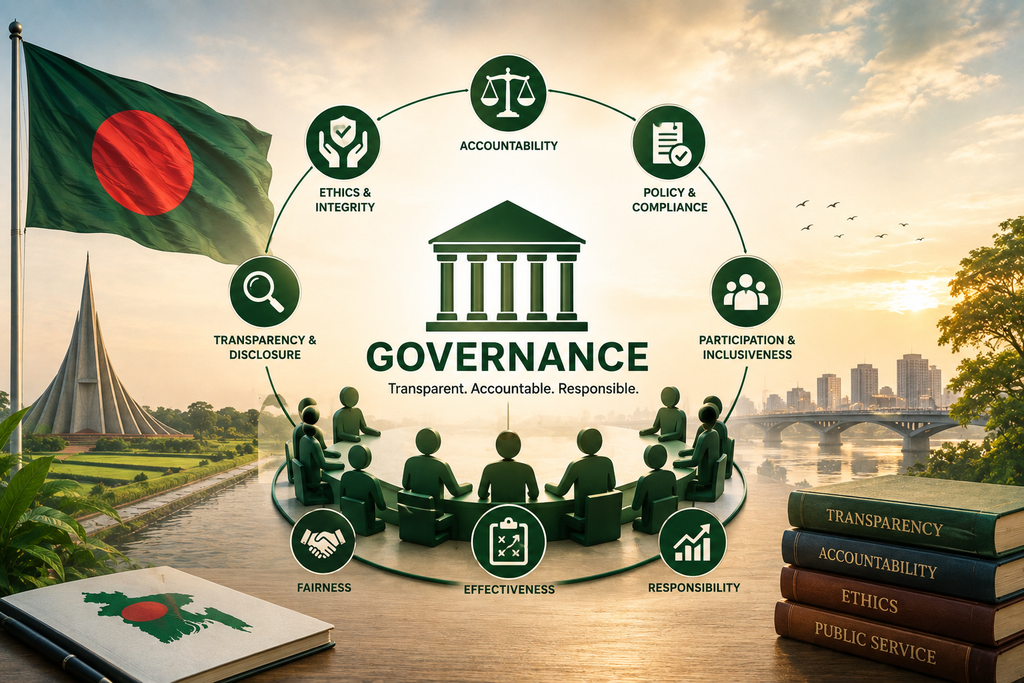
Governance Principles
Our governance is guided by the following principles:
Integrity
We seek to make decisions ethically and in the best interests of the Foundation and the communities we serve.
Accountability
Leadership and governing bodies are responsible for their decisions,